
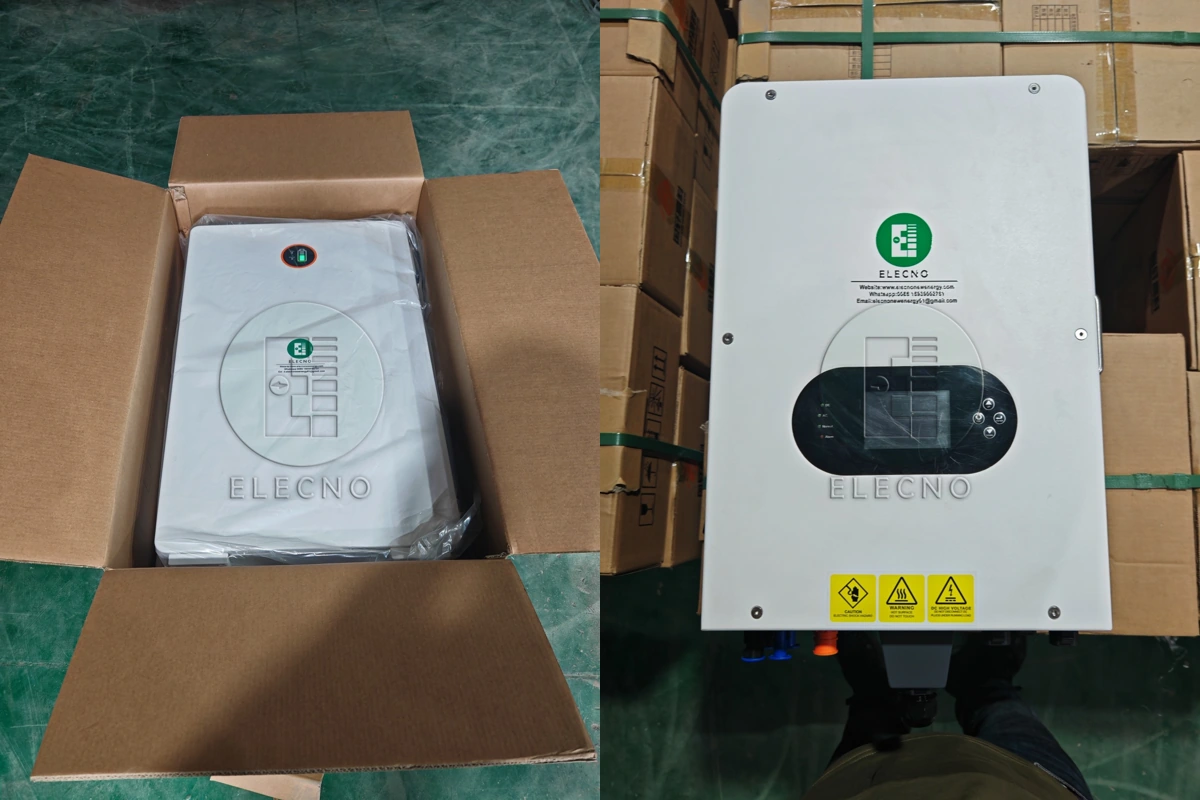
All-in-one storage combines battery and inverter equipment in an integrated package. Separate systems distribute those functions across components. The useful comparison is the complete installation: existing equipment, output power, usable energy, site conditions and responsibility for service.
For a new home system, integration may simplify equipment coordination. For an existing solar installation, keeping suitable equipment may matter more than reducing the number of enclosures. Neither approach is automatically cheaper, easier to expand or suitable for outdoor use.
Existing Solar Equipment
Start by establishing whether the project is a new installation or an addition to an existing solar system. For a retrofit, record the installed inverter model, solar arrangement and required backup functions before choosing a replacement package.
The Australian Government inverter guide describes arrangements that retain a solar inverter and add a battery inverter through an AC connection. It also distinguishes a hybrid inverter, which combines solar and battery inverter functions. These general concepts do not approve every retrofit or establish local eligibility for an ELECNO product.
An integrated storage package and an AC- or DC-coupled system are not interchangeable labels. Packaging describes where equipment is housed; coupling describes how the energy paths are connected. Ask the responsible installer to identify both for the proposed system.
An Integrated Product Example
The published ELE 16kWh All-in-One Inverter & Battery System lists the following values for its ESS 6kW 16kWh model. They describe this specific catalog configuration, not every all-in-one product.
| Listed item | Catalog value | Selection implication |
|---|---|---|
| Rated AC output capacity | 6kW | Check simultaneous load demand separately from stored energy. |
| Rated battery energy | 16kWh at 0.5C, 25°C | The energy rating has stated test conditions. |
| Usable battery energy | 14.4kWh at 90% DOD | Do not treat nominal energy as guaranteed AC energy or runtime. |
| Nominal battery voltage | 51.2VDC | This is a battery specification, not the household AC output voltage. |
| Ingress protection | IP20 | Do not describe this model as an outdoor-rated cabinet. |
Integration does not remove the need to check power and energy separately. A 16kWh label is not a 16kW output rating. The listed 14.4kWh usable battery energy is also not a promised amount delivered to household AC loads after conversion and auxiliary consumption.
For backup planning, use a load schedule and target outage hours, then verify the proposed product against that requirement.
Package Scope and Site Fit
Confirm the battery, inverter, controller and accessories included in the quotation. A shared enclosure does not prove that protection, metering, distribution equipment, solar connections or installation work are included. The issued design and packing list define the supplied scope.
| Project requirement | Integrated proposal | Separate proposal |
|---|---|---|
| Physical installation | Assess the complete enclosure, handling and clearances. | Assess each component, cable routing and service access. |
| Retained equipment | Identify what stays and what must be replaced. | Verify integration with the retained equipment. |
| Environment | Check the exact model’s location and protection requirements. | Check the requirements of every exposed component. |
| System coordination | Confirm the supplied matched configuration and instructions. | Identify who approves the battery–inverter combination. |
Where components are selected separately, review the voltage, current and BMS compatibility requirements. The presence of both products in one catalog does not itself approve them as a pair.
Service and Future Expansion
Ask which assemblies can be serviced or replaced independently and what access the technician needs. An all-in-one product is not necessarily replaced as a whole if one component fails. Separate enclosures do not necessarily make a substitute component compatible.
Expansion also needs a model-specific plan. Specify the intended later capacity and ask whether it changes the controller, firmware, operating-voltage range, inverter arrangement or installation space. A generic claim of expandability does not identify an approved future configuration.
Compare quotations at the same load and backup requirement. Separate equipment, accessories, handling, electrical work, commissioning and handover costs. Integration may simplify coordination, but that is not proof of the lowest installed cost.
A Separate-Equipment Shipment
The Netherlands shipment case records a stated 15kWh battery and 6.2kW inverter configuration. Its photographs show separately prepared equipment, protective packing and accessories. They give a practical view of the supplied items, not an independent performance test.
This case is not the same configuration as the 6kW/16kWh integrated product above. The case record’s outdoor description must not be transferred to the IP20 integrated model, and the photographed equipment does not establish suitability for another home or market.
Related Storage Products
Compare the integrated product with a complete separate-component proposal, not with the price or specification of a battery alone.
 All-in-one storageReview the 6kW/16kWh configuration →
 Separate battery configurationsExplore stacked battery specifications →
For inverter options, browse the solar inverter category. To compare complete proposals, send ELECNO your existing equipment list, loads and site layout.
Sources reviewed October 14, 2026: linked ELECNO product and shipment records, and the Australian Government Solar Consumer Guide, Inverters. Country-specific guidance is not automatically applicable elsewhere. Final selection and installation require the issued configuration documents, relevant manuals and local requirements.