
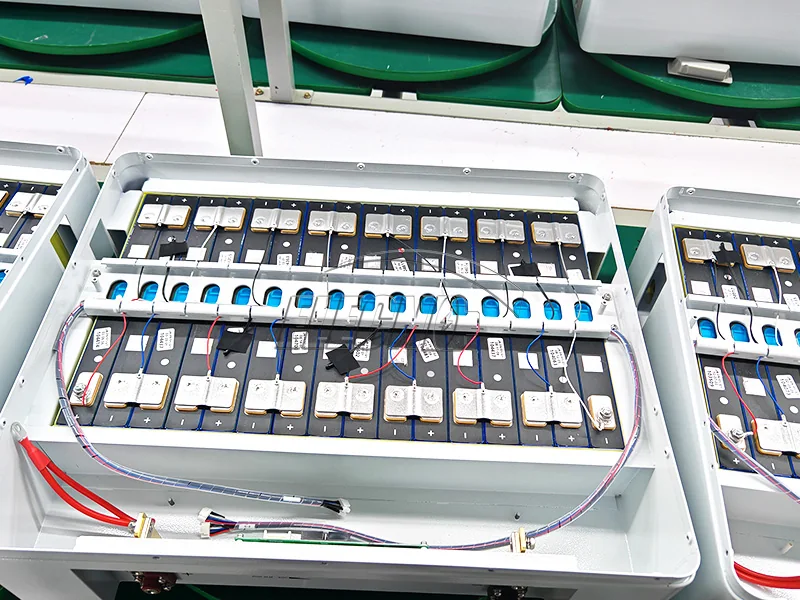
Battery customization needs two distinct approvals: the brand presentation and the product configuration. A logo sample can confirm artwork, but it cannot confirm a changed voltage, enclosure design or battery–inverter integration.
A clear OEM/ODM brief starts with an identifiable base product and separates what will change from what must remain traceable. That gives the buyer and supplier a practical basis for reviewing the sample, agreeing on documents and controlling later revisions.
ELECNO provides OEM/ODM cooperation information. The feasibility, price, quantity and lead time for a particular request belong in its written proposal. The examples below explain how to prepare and approve a request; they do not promise that every modification is available.
Customization Scope
| Brief section | What to provide | What to approve |
|---|---|---|
| Brand presentation | Logo files, placement, colors, labels and packaging text | Artwork and the product identification it preserves |
| Electrical configuration | Required battery energy, voltage, loads and inverter model | Issued specifications and supported integration |
| Physical configuration | Mounting location, dimensions, access and handling constraints | Enclosure and installation drawings |
| Documents and support | Target market, manuals, records, warranty and support expectations | Order-specific handover package and responsibilities |
A distributor requesting a new front-panel logo is asking a different question from a project buyer requesting a new battery voltage or inverter integration. Distinguishing them early helps the supplier identify the work and evidence required.
Base Product and System Configuration
Choose a product family and state the configuration being considered. For example, a wall-mounted battery request should identify the model—not merely “a 5kWh enclosure.” A stacked battery request should state the module arrangement and whether future additions are part of the brief.
Ask the supplier to identify which requirements fit an existing configuration and which require review. Do not assume a change in enclosure, connector, controller or firmware leaves the electrical design and supporting documents unchanged.
Branding and Technical Identification
Approve a clear nameplate and serial-number plan alongside the logo. The buyer and installer should be able to identify the supplied model, applicable specifications and relevant records even when it carries a distributor’s branding.
Decide who controls translations and version updates for labels and manuals. Verify any certification marks or compliance statements before placing them in the artwork. A design request is not evidence that a particular mark or statement applies to the final branded product.
European Commission manufacturer guidance explains the responsibility for conformity assessment, technical documentation and declarations in its applicable framework. If a branded product will enter that market, clarify responsibilities with qualified compliance advisers rather than treating label printing as the entire process.
Sample Acceptance
Agree on what the sample must demonstrate before it is produced. For a branding change, inspect approved graphics, dimensions, label content and packing. For a configuration change, request the agreed technical documentation and test evidence, with qualified personnel handling any electrical evaluation.
| Requested change | Sample evidence | What the evidence does not establish |
|---|---|---|
| Front-panel logo | Approved artwork, position, color and label revision. | A new electrical rating or certification. |
| Enclosure dimensions | Issued drawing, fit and service-access review. | Unchanged mounting or thermal requirements. |
| Battery voltage or BMS integration | Revised specifications and configuration-specific technical evaluation. | Compatibility based only on a connector or cabinet photograph. |
For example, approving a distributor logo on a selected 51.2V base product is not the same task as requesting a 102.4V system. The first involves brand presentation; the second requires electrical and integration review. These are hypothetical requests, not confirmation that the same enclosure can be converted between them.
Record the accepted sample revision, unresolved items and permitted changes before production. An attractive enclosure should not substitute for checking the model, documentation and integration required by the order.
Revision Control and Order Terms
Keep a revision record tying the base model, drawing, artwork, label, manual and accepted sample to the order. If a connector, controller, firmware or enclosure changes after sample approval, ask which documents and acceptance checks must be reviewed again before production.
The commercial agreement should identify quantity, request-specific lead time, sample or tooling charges where applicable, permitted substitutions, warranty arrangements and the support contact. An approved logo file should not be the only traceable record of what was ordered.
These are questions to settle with the supplier, not standard terms promised by this article. Avoid quoting an assumed MOQ or delivery time before receiving the actual proposal.
Related Products and Customization Support
Send the base product and intended application, target market, requested electrical or enclosure changes, exact inverter model, branding files, expected quantity and acceptance-document list. If some items are unknown, identify them as open questions instead of filling them with guesses.
 Wall-mounted batteriesReview the available configurations →
 Stacked batteriesCompare complete battery configurations →
The Latin America customized ESS case provides context for project-oriented cooperation. It does not establish that every customization or approval is available for another order.
Discuss an OEM/ODM brief with ELECNO. The goal is an agreed specification and acceptance plan—not only a branded product photograph.
Sources reviewed October 14, 2026: ELECNO OEM/ODM service and linked product/project pages; European Commission manufacturer guidance on CE marking. The acceptance examples are illustrative, not test results or available customization commitments. Applicable responsibilities depend on the actual product, market and business arrangement.